

Quick Answer: Why gated apartment communities are worth it comes down to enforcement, not the gate itself. A working barrier, few entry points, decent lighting, and management that actually tows violators cut casual traffic through your parking lot. Expect fewer strangers wandering the property, not a crime-free bubble.
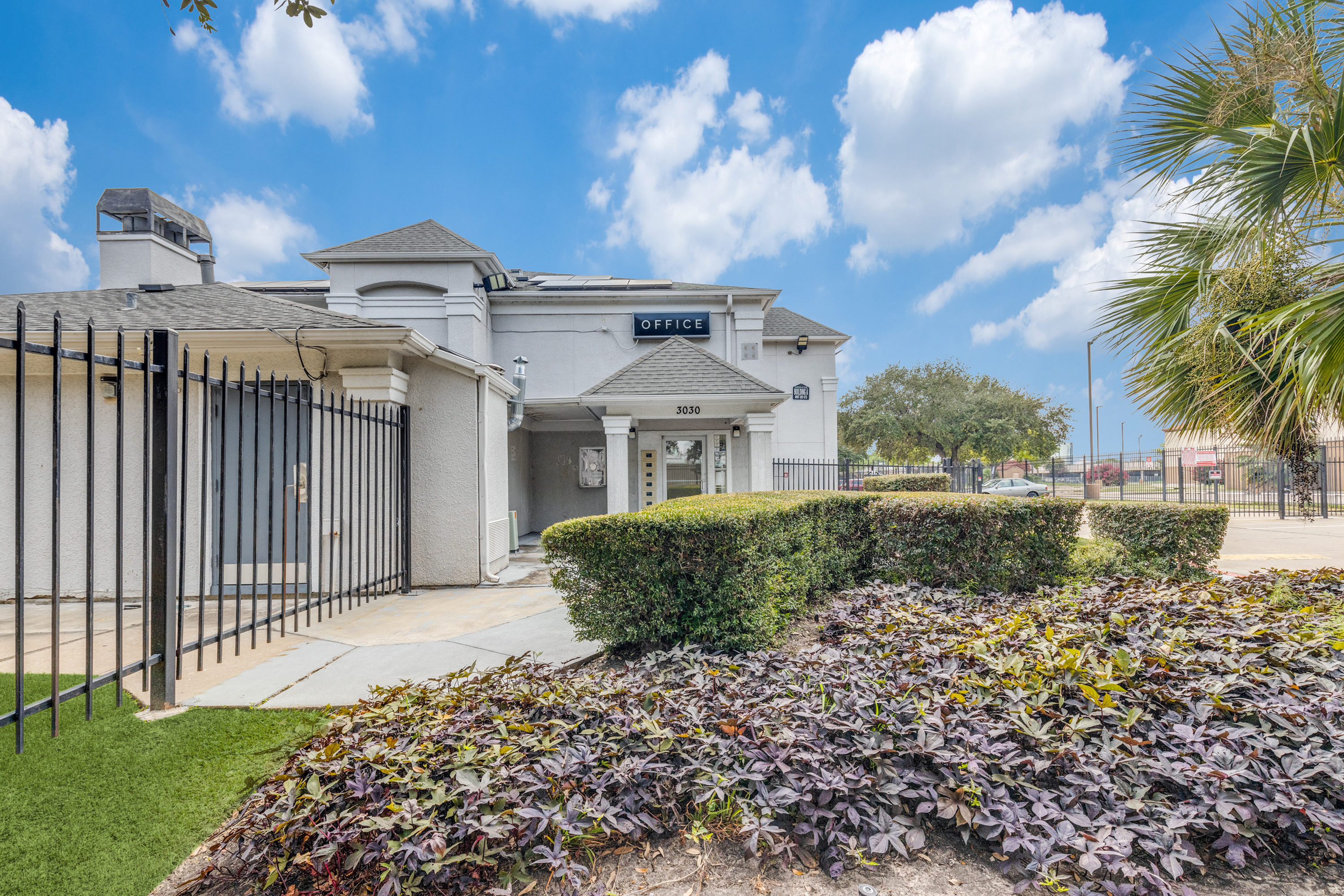
Ask ten renters why gated apartment communities are worth it and you get ten different answers. Some want the deterrent. Others want a quieter lot, controlled guest access, or just a clear boundary between the street and their front door. Sorting the real benefit from the brochure copy is worth doing before you sign, and it is a fair question to put to any community you tour, including a gated studio property like The Fusion at Rye 3030 in Houston's Westchase District.
What to look for in gated apartment communities
Look past the gate itself. Gated apartment communities vary enormously in how much protection they actually deliver, and the difference shows up in details most tours skip: how many ways there are onto the property, whether the gate arm has been broken since spring, who holds a working code, and how fast maintenance responds when the hardware fails.
Four things are worth checking on a tour, and none of them take more than a minute:
- Walk the perimeter. Count every gap in the fence line where someone could step through on foot.
- Ask how codes are issued and how often they are changed after a resident moves out.
- Look at the gate motor and the keypad housing. Sun damage and duct tape tell you how old the system is.
- Ask what happens to a car parked in a visitor spot for a week. The answer tells you whether anyone enforces anything.
What is a gated community, exactly?
A gated community is a residential property where people who do not live there cannot freely drive or walk in. Access runs through a barrier: a swing or slide gate on a code or fob, a card reader at a pedestrian entrance, sometimes a staffed booth. Renters outside the United States often call the same arrangement a gated society. Federal housing statisticians use a wider label, secured communities, which covers walled subdivisions and high-rise buildings with a front-desk check-in alike. The American Housing Survey, run by the Census Bureau for HUD, is the closest thing to a national count of them, and its published figures on walled or access-controlled housing go back to 2015. There is no current federal tally.
Are controlled access apartments actually safer?
Somewhat, and less than the leasing brochure implies. Controlled access apartments cut opportunity. Someone who has to defeat a vehicle gate, then a building door, then a unit lock will usually move along to an easier target. National crime data does not isolate gated properties, though, so nobody can hand you a clean before-and-after number for any specific complex.
Here is what the numbers do show. The Bureau of Justice Statistics counted 13.1 million property victimizations nationwide in its Criminal Victimization, 2024 bulletin, published in September 2025. Urban households reported property crime at a rate of 181.6 per 1,000 households that year, close to double the suburban rate of 96.1. Burglary or trespassing touched 1.01% of American households. Roughly 31% of property crimes were reported to police at all, which is exactly why property-level crime numbers tend to be incomplete no matter who is quoting them.
Treat a gate as a delay, not a wall. Tailgating is the obvious hole: one resident opens the arm and two cars slip through behind. Then there is the pedestrian gap nobody fixed, the keypad that died in July, the delivery code that circulated in a group chat. Ask the leasing agent how many days the gate was out of service last year. Then walk out and ask a resident the same question.
What living in a gated community actually costs
Rent is the obvious line item. Living in a gated community usually means paying for the hardware somewhere, whether through a slightly higher base rent, a refundable remote deposit, or a monthly amenity charge. The less obvious cost is friction. Guests need codes. Movers need scheduling. Food gets left at the gate more often than you would like.
| What you are comparing | Gated or controlled access | Open access property |
|---|---|---|
| Getting onto the property | Code, fob, or remote at a vehicle gate, with limited entry points | Anyone drives or walks in at any hour |
| Parking lot traffic | Cut-through driving and overnight loitering drop noticeably | The lot doubles as a shortcut and free overflow parking |
| Package delivery | Carriers may need a code, or leave items at the gate | Dropped at the door, visible from the street |
| Guests and contractors | Need a code, a call-in, or an escort from a resident | Walk straight up to your door |
| Parking enforcement | Usually stricter, and visitor spots are policed | Looser, with more unauthorized cars |
| What neither one solves | Anything done by someone already living or working on site | Anything done by someone already living or working on site |
Then weigh it against the actual rent. As of August 26, 2026, the floor plans page at The Fusion at Rye 3030 lists three studio layouts: 238 square feet starting at $750, 246 square feet starting at $815, and 253 square feet starting at $917. Each runs on an 11 to 13 month term with a $250 deposit, and utilities plus WiFi are bundled into the monthly payment. Check the current studio pricing and availability before you tour, since apartment pricing moves week to week and any figure you read online is a starting point rather than a quote.
Frequently Asked Questions
1. Is it a gated community if there is no guard at the gate?
Yes. Most gated rental properties in the United States use unstaffed automated gates on codes, fobs, or remotes rather than a guard booth. Staffed entrances are far more common in large master-planned subdivisions and luxury high-rises. The absence of a guard changes the cost of the system, not the definition.
2. Do gated community apartments cost more to rent?
Sometimes, though the gate is rarely the reason. Gated community apartments tend to be newer or professionally managed, and both of those raise rent on their own. Compare the total monthly payment, not the base rent, especially where utilities, internet, or a remote deposit are handled differently between two properties.
3. What should I check before signing a lease at a gated property?
Four questions cover most of it:
- How many vehicle and pedestrian entrances does the property have?
- How many days was the gate inoperable in the past twelve months?
- Is the gate remote or fob deposit refundable, and how much is a replacement?
- Who has after-hours access: carriers, contractors, cleaning crews, anyone else?
4. Will a gate lower my renters insurance premium?
Possibly, but do not count on it. Some insurers discount policies for security features such as deadbolts, alarm systems, or smoke detectors, and a controlled entry may factor in. Discounts vary by carrier and by state, so get the number in writing from your own insurer before you treat it as savings.
5. Can packages still be delivered inside a gated apartment community?
Usually yes. Major carriers hold access codes for most managed properties, and many communities issue a standing delivery code or accept parcels at the office during business hours. Ask specifically how your property handles it, because the arrangement differs from one management company to the next.
Conclusion
Why gated apartment communities are worth it has less to do with the gate and more to do with the operation behind it. A barrier that works, a short list of entry points, and a management team that enforces parking and access rules will change how the property feels at eleven at night. A broken arm stuck in the up position will not. Judge the system, not the sales pitch.
Touring in west Houston? Look through the full list of community and apartment features and the Westchase District location map, then call the leasing office at (346) 319-4369 to schedule a walkthrough and ask the gate questions in person.
