

Quick Answer: Here's how to measure your furniture before moving into a studio: record each large piece's width, depth, height and diagonal depth in inches. Then measure the studio's walls, doorways, hallways and any stairwell on the route in. Compare both lists on paper. Anything wider than the narrowest opening needs to come apart or stay behind.
A 250-square-foot studio leaves little room for guesswork. Knowing how to measure your furniture before moving into a studio saves you from a sofa wedged in a hallway on move-in day and a layout that never quite works. For renters heading to Houston's Westchase District, The Fusion at Rye 3030 offers compact, all-bills-paid studios where every inch is worth planning ahead.
What Is the Average Size of a Studio Apartment?
The average size of a studio apartment in the U.S. is about 460 square feet, based on RentCafe's analysis of Yardi data as of May 2026. Studios are the smallest unit type on the rental market, and the size of a studio apartment swings widely by city and building age.
For a wider view, the U.S. Census Bureau's 2025 Characteristics of New Housing put the median new rental unit at 1,000 square feet across all bedroom counts. Other trackers report slightly different studio averages, so treat any national figure as a ballpark.
Comparing the Square Feet of a Studio Apartment
Current floor plan listings for The Fusion at Rye 3030 show studios from roughly 236 to 293 square feet. That's about half the national studio average, which is exactly why measuring comes first. In a space this efficient, one oversized sectional or a deep dresser can decide the whole layout before you've unpacked a box.
Look through the community photos and virtual tour to see how the room flows. Then grab the tape.
How Do You Go About Measuring Furniture for a Studio?
Measuring furniture for a studio means capturing four numbers for every large piece: width, depth, height and diagonal depth. Use a metal tape measure, write each figure down in inches, and measure the solid frame rather than cushions or pillows. The frame is what has to clear a doorway.
| Measurement | How to Take It | What It Tells You |
|---|---|---|
| Width | Widest point, arm to arm on a sofa | How much wall the piece claims |
| Depth | Front edge to back | How far it reaches into your walkway |
| Height | Floor to the highest point, legs on | Clearance under windows and ceiling fans |
| Diagonal depth | Top back corner to bottom front corner | Whether a sofa can be tilted through a door |
| Door clear width | Face of the open door to the stop on the far jamb | The real opening, narrower than the door |
| Stair and landing clearance | Narrowest width plus ceiling height at each turn | Whether a long piece can pivot on the landing |
Start With a Living Spaces Measurement
Next, measure the room itself. A living spaces measurement taken during your tour beats guessing from a listing photo. Record each wall length, then mark where the windows, outlets, closet door and AC vent sit, plus which way the entry door swings. Those fixed points decide where studio room furniture can actually go, far more than the total square footage does.
Some items don't need measuring at all. Each apartment already includes a refrigerator and a microwave, according to the community's apartment amenities list, so those can stay off your moving list.
Sketch Your Studio Apt Furniture Layout
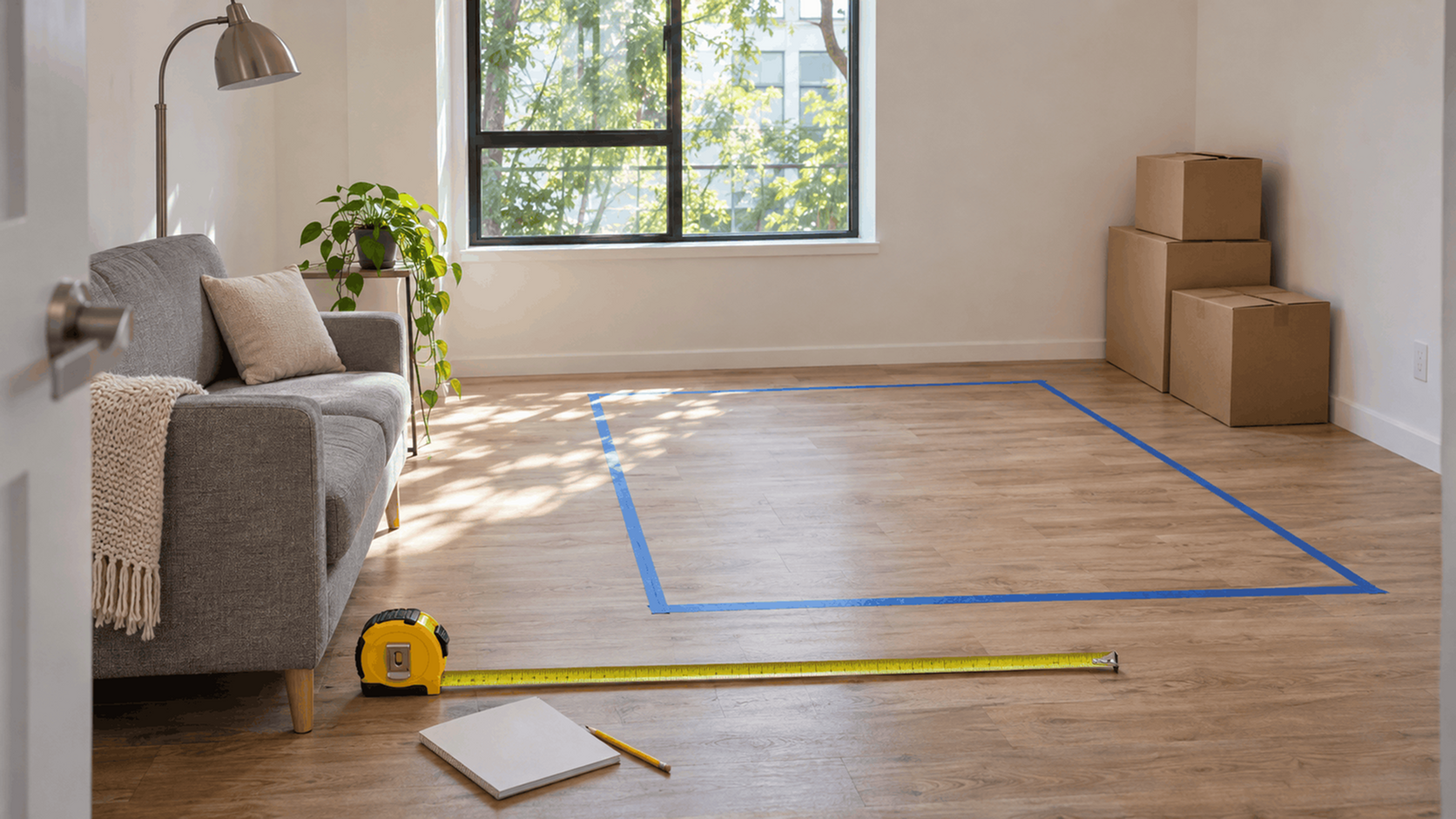
Graph paper works. So does painter's tape on your current floor. Mark the bed and sofa at full size, then walk the paths between them. Can you get from the door to the bathroom without turning sideways? If a piece blocks that path, it's the one to rethink.
Zones help in a single room. Put sleep along one wall, seating near the window, work or dining close to the kitchen, and the dresser near the closet. When you shop for new studio apt furniture, check each product's listed dimensions against your sketch before you buy.
Will Your Furniture Fit Through Stairwell Turns and Doorways?
Your furniture will fit if every piece clears the narrowest point on its route, not just your front door. Measure each doorway, hallway, elevator and stairwell between the parking lot and your studio. Compare those numbers against each piece's width, depth, height and diagonal depth before moving day.
Upper-floor moves are the norm, too. According to the same Census Bureau report, 32% of new multifamily units completed in 2025 were in three-story buildings, and another 61% were in buildings with four or more floors. Plan for stairs or an elevator, not a straight shot from the curb.
Doorways: Measure the Clear Opening
A door's listed size isn't its usable size. The federal ADA accessibility standards measure clear width from the face of the open door to the stop on the opposite jamb, and set 32 inches as the minimum for an accessible doorway. Use that same method at your new front door. If a sofa's depth and height are both wider than the clear opening, its diagonal depth has to be smaller for movers to angle it through.
Stairwells: Check Every Turn
Measure the stair width at its tightest spot, the landing depth and the ceiling height above each turn, and note any handrail that juts into the path. A tall headboard can clear a straight run and still jam on a landing. Ask the leasing office which entrance and stairwell movers should use, then walk it yourself with the tape.
Choosing Studio Apartment Furniture That Moves Easily
Studio apartment furniture with removable legs or flat-pack frames gives you options when the numbers are close. Taking the legs off a sofa often trims enough height and diagonal depth to clear a tight door. Bed frames and desks usually come apart with basic tools, so bag and label the hardware as you go.
Moving from another state? The FMCSA's tips for a successful move explain the written estimate and inventory your mover should give you. Share your measurements with the crew ahead of time so they bring the right tools.
Frequently Asked Questions
1. What furniture fits in a studio around 250 square feet?
Compact studios work best with a short list of multi-use pieces. Measure first, then prioritize:
- A full or queen bed with storage underneath
- A loveseat or apartment-size sofa instead of a sectional
- A drop-leaf or small round table
- Tall, narrow shelving that uses wall height
- A storage ottoman that doubles as extra seating
2. How do I know if my couch will fit through the door?
Measure the couch's width, depth, height and diagonal depth, then the door's clear opening from the face of the open door to the stop. If the depth or height is smaller than that opening, it can go straight through. If neither is, the diagonal depth must be smaller so movers can angle it in.
3. Should I measure my studio before signing the lease?
Yes, if you can. Floor plan square footage tells you the total area, but not where windows and outlets sit. Bring a tape measure to your tour, note each wall length, and check it against your furniture list. Selling a bulky piece before the move is much easier than dealing with it after.
4. What tools do I need for measuring furniture?
A 25-foot metal tape measure handles most jobs. Add painter's tape for marking layouts on the floor and a notes app or notepad for recording numbers. A helper makes long pieces easier to measure accurately. Photograph each piece with its dimensions noted beside it, so you can check them while shopping.
5. Is studio room furniture different from regular furniture?
Not always. Pieces sold for small spaces usually have shallower depths, slimmer arms, raised legs and built-in storage. Labels like apartment size mean different things at different retailers, though. Compare the listed dimensions against your own measurements rather than trusting the product name alone.
Conclusion
Learning how to measure your furniture before moving into a studio takes about an hour, and it can spare you a long, frustrating moving day. Record four numbers per piece, then walk the route from the curb to your door. If you're planning a move to Houston's Westchase District, compare your notes against the studio floor plans at The Fusion at Rye 3030 and book a tour with your tape measure in hand.
