

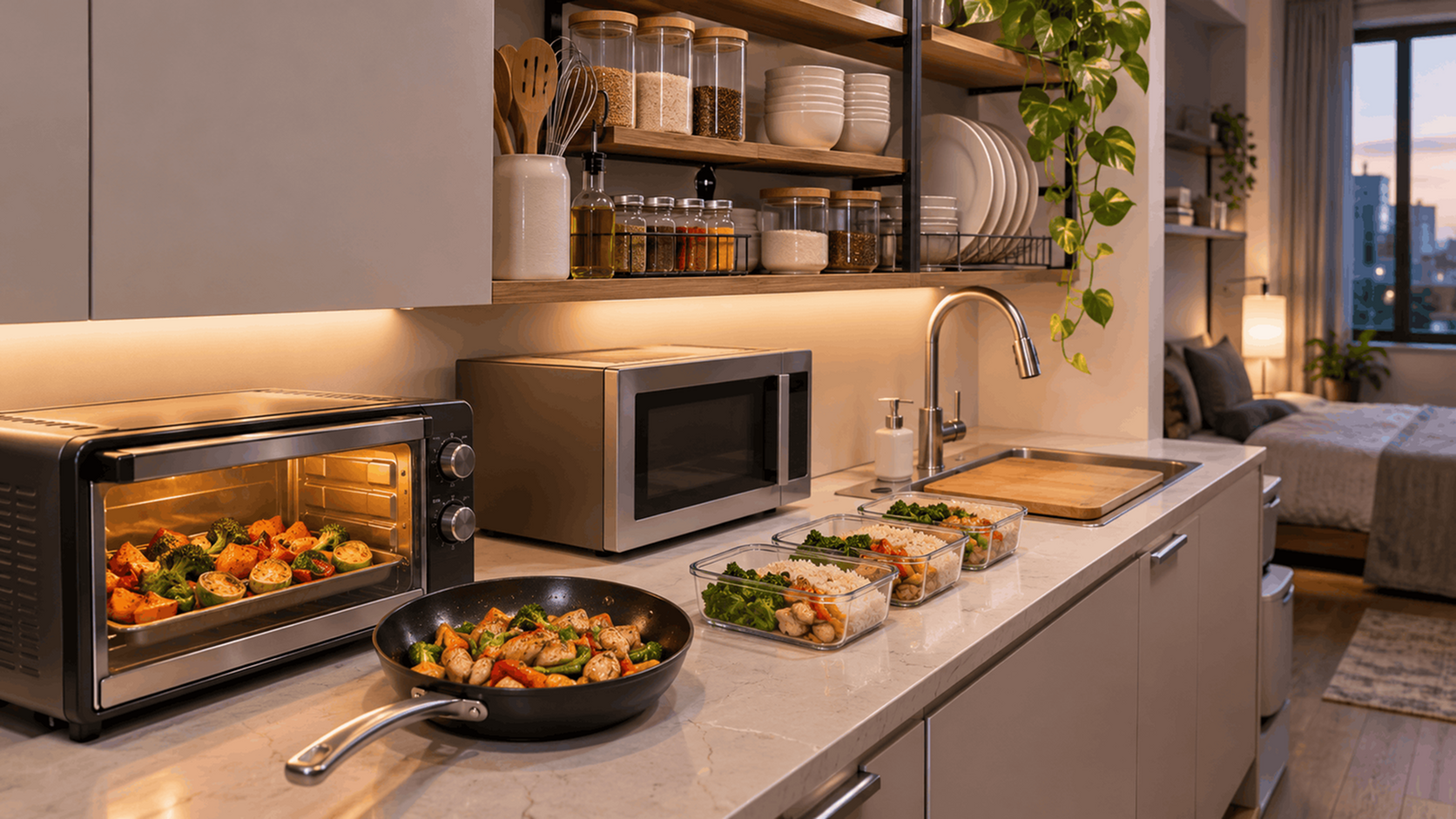
Quick Answer: You can cook real meals in a tiny apartment kitchen by building dinners around one or two compact appliances, usually a microwave and a toaster oven, plus a single good skillet. Prep ingredients that work in several dishes, cook in batches, and clean as you go so the counter stays free for the next step.
Two burners and a strip of counter can still produce roasted vegetables, a pot of chili and a decent omelet. The trick to learning how to cook real meals in a tiny apartment kitchen is picking tools that earn their space and cooking in a smart order. If you live in, or are touring, one of our studio apartments in Houston's Westchase District, this guide shows how to make a compact layout feel like a working kitchen.
What Is Small Space Cooking, and What Do You Actually Need?
Small space cooking means making full, balanced meals with limited counter room, few appliances and minimal storage. You don't need a full range or a wall oven. A microwave, a toaster oven, one skillet, one pot and a sharp knife cover most weeknight dinners. The goal is fewer tools that each do more jobs.
Think of it like packing a carry-on. Every item has to justify the space it takes.
Kitchenette Essentials Worth the Counter Space
Start lean and add only what you use every week. These kitchenette essentials cover most everyday cooking:
- A 10-inch nonstick or cast iron skillet with a lid
- A 3-quart pot for grains, pasta and soup
- A chef's knife and a cutting board that fits over the sink
- Microwave-safe glass containers with vented lids
- An instant-read food thermometer
- A quarter-size sheet pan that fits inside a toaster oven
Store the pan and board vertically, between the fridge and the wall or inside a cabinet with a file-style organizer. Vertical storage is the single biggest win in a compact space kitchen.
How Do You Plan Meals When Cooking in a Kitchenette?
Cooking in a kitchenette works best when you plan around appliances, not recipes. Pick two or three base ingredients for the week, such as rice, chicken thighs and a bag of greens, then cook them with different appliances and sauces. That way one prep session feeds you four or five nights without a crowded fridge.
Batch the slow parts. Cook a pot of rice or lentils on Sunday, portion it into containers, and you've already done half the work for several dinners. Wash the pot right away. In a small sink, one dirty pot can block everything else.
Shorter, more frequent grocery runs also help when fridge space is tight. Use our neighborhood map and directions to plan a quick stop on your way home.
Microwave Meals That Count as Dinner
Microwave meals get a bad reputation, but the appliance itself is a capable cooker. The U.S. Food and Drug Administration notes that microwave cooking doesn't reduce the nutritional value of food any more than conventional methods do. Try steamed salmon with frozen broccoli, a mug-style egg scramble, or baked sweet potatoes topped with black beans and salsa.
Food safety matters here. According to the USDA's guidance on cooking with microwave ovens, microwaves can heat unevenly and leave cold spots where bacteria survive. Cover your dish, stir or rotate halfway through, and let it stand for a minute or two before you check the temperature.
Toaster Oven Recipes for Crispy, Roasted Food
A toaster oven fills the gap a microwave leaves: browning and crisping. Toaster oven recipes that work well include sheet-pan chicken thighs with potatoes, roasted chickpeas, open-faced melts and small frittatas. Line the tray with foil for faster cleanup.
There's an energy bonus too. As of November 2026, the U.S. Department of Energy's Energy Saver kitchen appliance guidance says a toaster or convection oven uses one-third to one-half as much energy as a full-sized oven for small meals. The tradeoff is capacity. You'll fit two chicken thighs, not eight, so cook in rounds or pair it with the stovetop.
Which Appliance Should Handle Which Meal?
Match each dish to the appliance that does it best, and you'll avoid juggling everything at once. The table below is a quick reference for a typical studio setup.
| Appliance | Best For | Example Meal | Watch Out For |
|---|---|---|---|
| Microwave | Steaming, reheating, quick eggs | Salmon with steamed broccoli | Cold spots; stir and rest food |
| Toaster oven | Roasting, browning, small bakes | Chicken thighs and potatoes | Small capacity; cook in rounds |
| Stovetop skillet | Searing, stir-fries, sauces | Chicken and vegetable stir-fry | Never leave it unattended |
| Slow cooker | Soups, stews, shredded meat | Turkey chili | Takes counter space all day |
| Best combo | Microwave plus toaster oven | Full plate, no big oven | Run one at a time if outlets are shared |
No Oven Recipes for Busy Weeknights
Plenty of no oven recipes taste like real cooking. A one-pan shrimp and rice skillet, black bean tacos, peanut noodles and a chickpea curry all come together on a single burner in under 30 minutes. Keep the skillet in sight the whole time. The U.S. Fire Administration reports that cooking is the leading cause of home fires and home fire injuries, and unattended equipment was the top factor in nonconfined cooking fires, so its cooking fire safety tips are worth a read before you start.
Frequently Asked Questions
1. Can you really cook healthy meals without a full kitchen?
Yes. A microwave steams vegetables and fish well, a toaster oven roasts proteins, and a single skillet handles stir-fries. Build each plate around a lean protein, a vegetable and a grain you batch cooked earlier in the week. Seasoning and sauces do the rest, so meals don't feel repetitive.
2. What are the best dorm room meals that also work in a studio apartment?
Good dorm room meals rely on the microwave and a few shelf-stable staples, which makes them a natural fit for studio living. Try these:
- Microwave baked potatoes with chili and cheese
- Overnight oats with fruit and nut butter
- Instant rice bowls with canned tuna and veggies
- Mug egg scrambles with spinach and salsa
3. How hot should microwaved leftovers get?
Reheat leftovers and casseroles to 165°F, measured with a food thermometer, according to the FoodSafety.gov minimum internal temperature chart. Check in a few spots, not just the edge. Microwaves heat unevenly, so the center of a dense dish is usually the last place to warm through.
4. How do I keep a small kitchen from feeling cluttered?
Store appliances you use less than weekly in a cabinet or closet. Hang utensils on a wall rail, stack containers by size and keep only one cutting board out. Wash each tool right after you finish with it. A clear counter matters more than extra gadgets when space is tight.
5. Is a toaster oven worth it if I already have a microwave?
For most people, yes. A microwave can't brown or crisp food, while a toaster oven roasts, toasts and bakes small portions. Together they cover nearly every meal type. Check your counter depth and outlet placement first, and avoid running both on the same outlet if it trips easily.
Conclusion
A compact layout doesn't limit what you eat. It just rewards a little planning, smart appliance choices and a habit of cleaning as you cook. Want a home base for your new routine? Compare our studio floor plans, explore the community amenities, and see how easy it is to cook real meals in a tiny apartment kitchen in Houston.
